An outdoor kitchen brings gas, electricity and open flame close to the house, so provincial safety rules and city by-laws set what you can build and who is allowed to connect it.
| Item |
What the rules say |
| Wood-burning fire pit or fireplace |
Not permitted; open-air burning is prohibited in Toronto |
| Gas fire table or patio campfire unit |
Allowed if approved by both ULC and CSA, used as directed and always supervised |
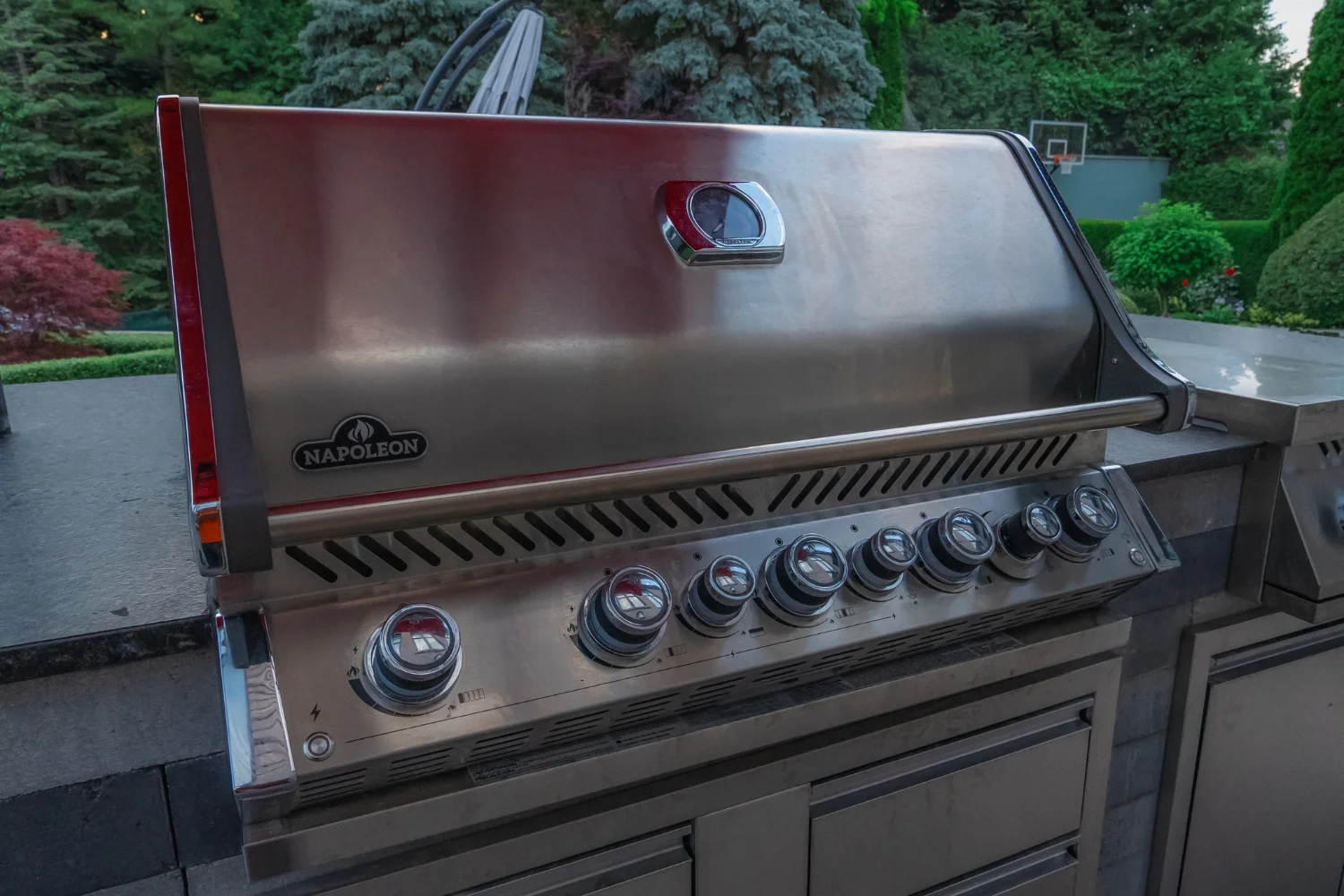
| Barbecues and grills for cooking |
Allowed under the Ontario Fire Code |
| Built-in gas fireplace with a chimney |
Installing or rebuilding a chimney or fireplace is on the City’s building permit list |
| Gas line to the grill or fireplace |
Installed by a TSSA-registered contractor using certified gas technicians |
| Power for fridge, lights and outlets |
ESA notification before work starts; outdoor outlets need Class A GFCI protection |
What Drives the Cost of an Outdoor Kitchen
Four things move the price most: the length of the counter run, the appliances you choose, whether the outdoor kitchen sits under a roof, and how far the gas and power have to travel from the house. Placing the kitchen near the gas meter and an existing exterior wall keeps trenching short, which leaves more of the budget for the grill, luxury finishes and the stone.
Choosing Counters for a Toronto Winter
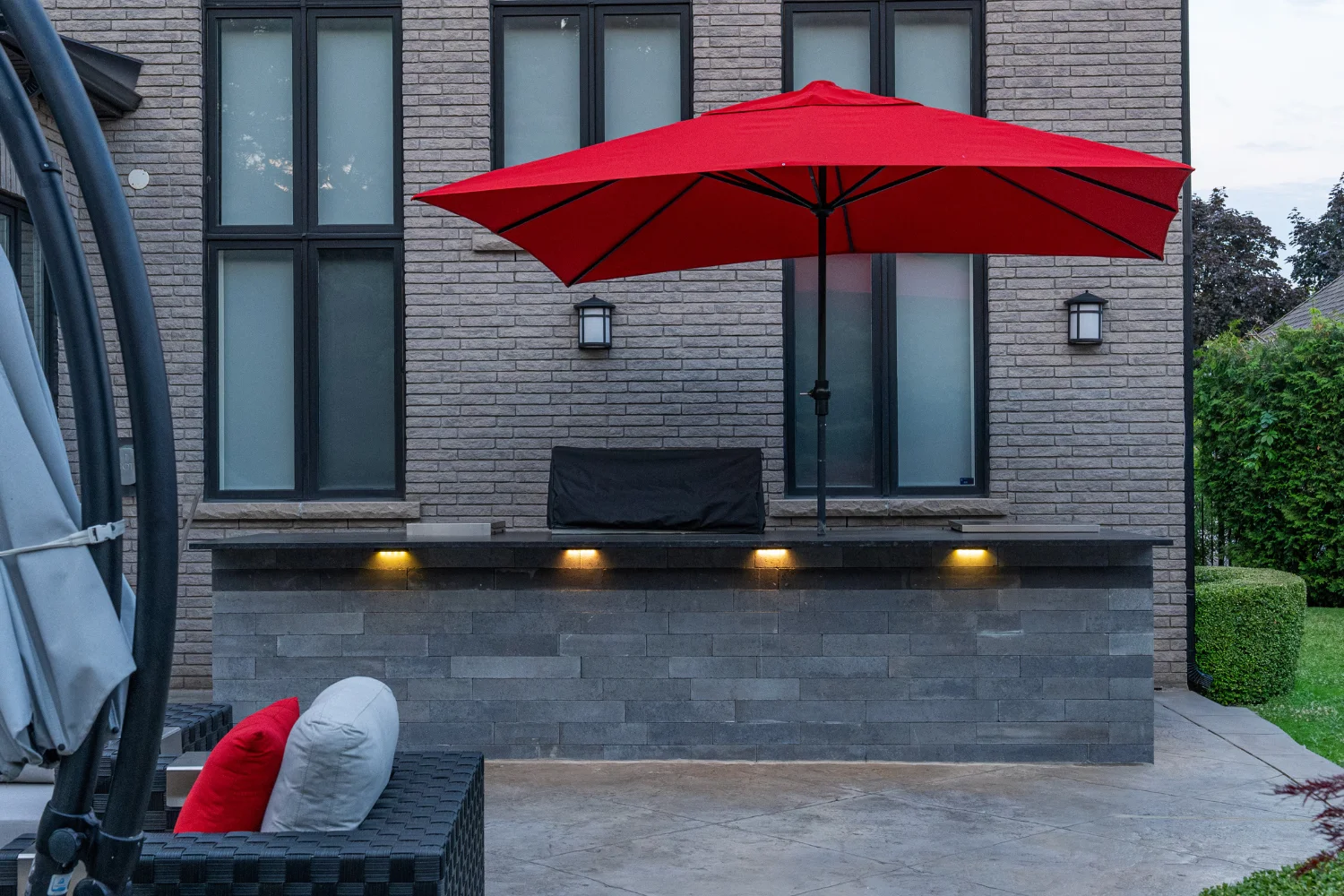
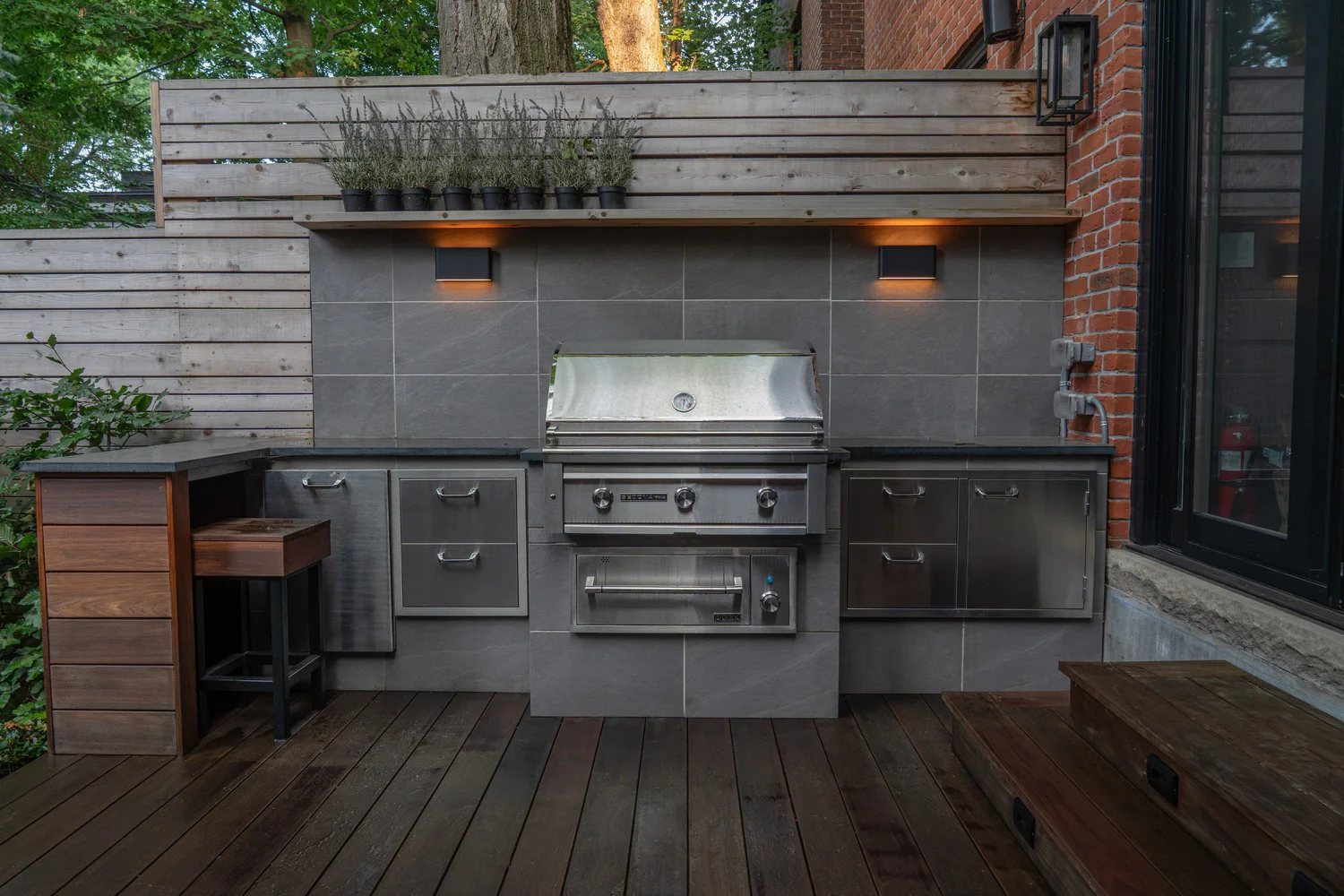
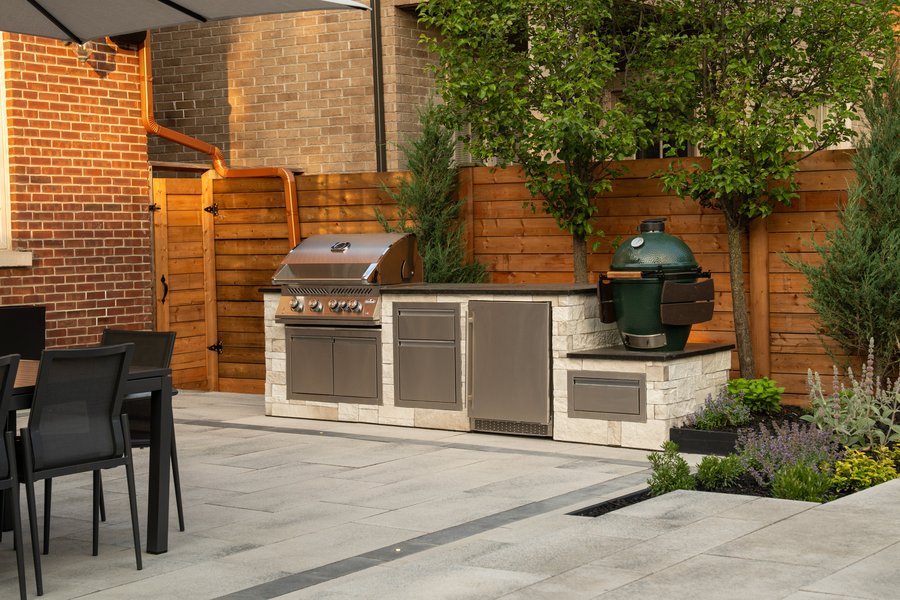
Granite and dense natural stone handle freeze-thaw well and shrug off heat from a pan. Quartz gives a cleaner, more uniform look, but check the manufacturer’s rating for outdoor sun exposure before you commit. Stainless steel cabinets and doors keep storage dry through a wet spring.
Where the Outdoor Kitchen Should Sit
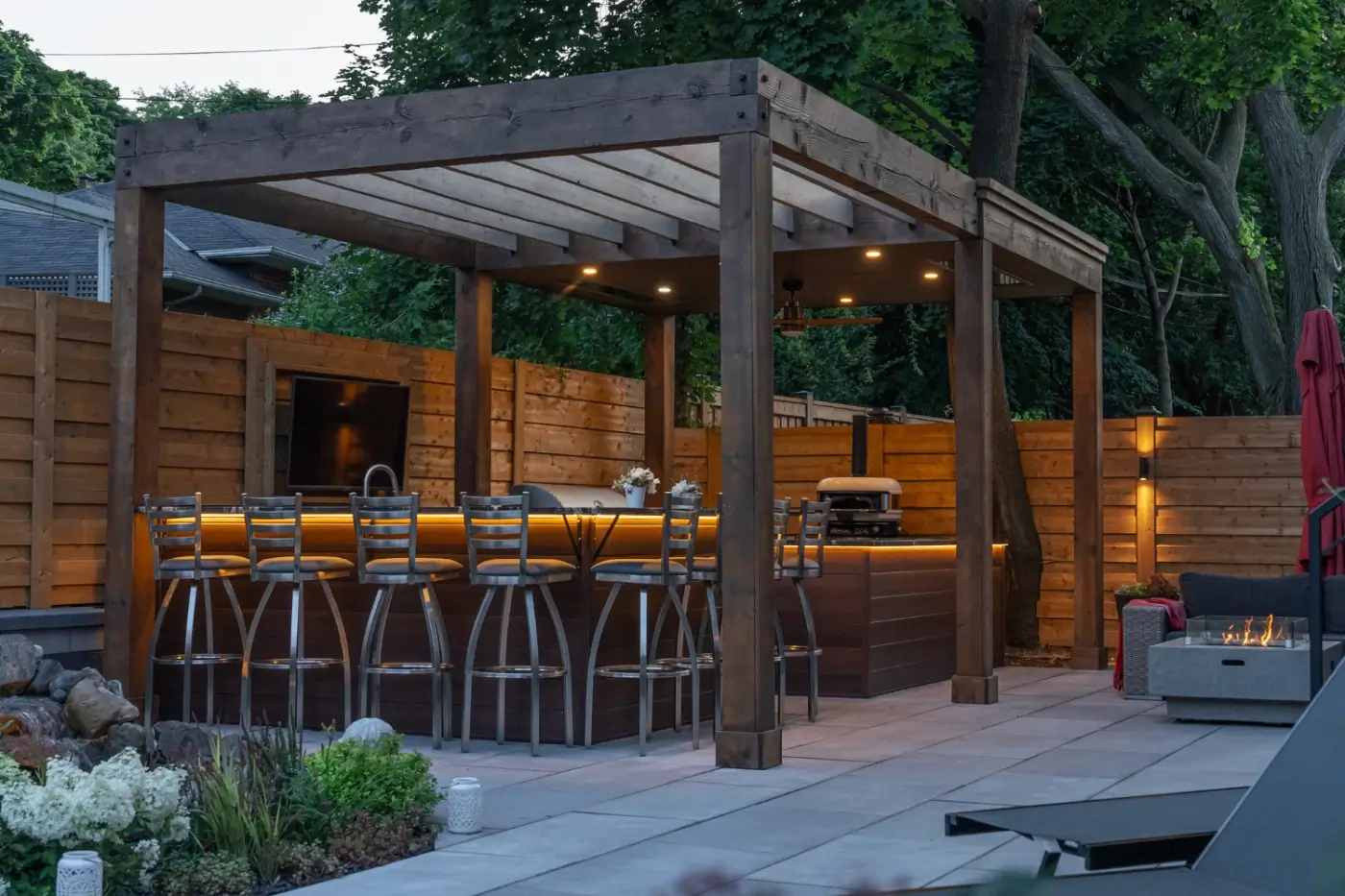
Most outdoor kitchens work best within a few steps of the back door, on the same patio level as the dining table, with the grill facing guests rather than a fence. Keep the cooking area clear of low branches and overhangs that are not rated for heat, and leave a clear path so the cook is never walking through the lounge area with a hot tray.
How an Outdoor Kitchen Installation Runs
- Design consultation: We look at the yard, the gas meter location and how you cook, then agree on a budget range.
- Layout and 3D renders: Counter runs, appliance positions, seating and shade are drawn and revised with you.
- Gas and electrical planning: Routes for gas lines and electrical are set, with ESA notification and licensed trades lined up.
- Base and structure: The patio base, counter frames and any roof or pergola are built.
- Counters and appliances: Tops are installed and appliances are set, connected and tested.
- Final walkthrough: We show you the shut-offs, care for the stone and how to prepare the outdoor kitchen for winter.
Gas or Wood for a Pizza Oven?
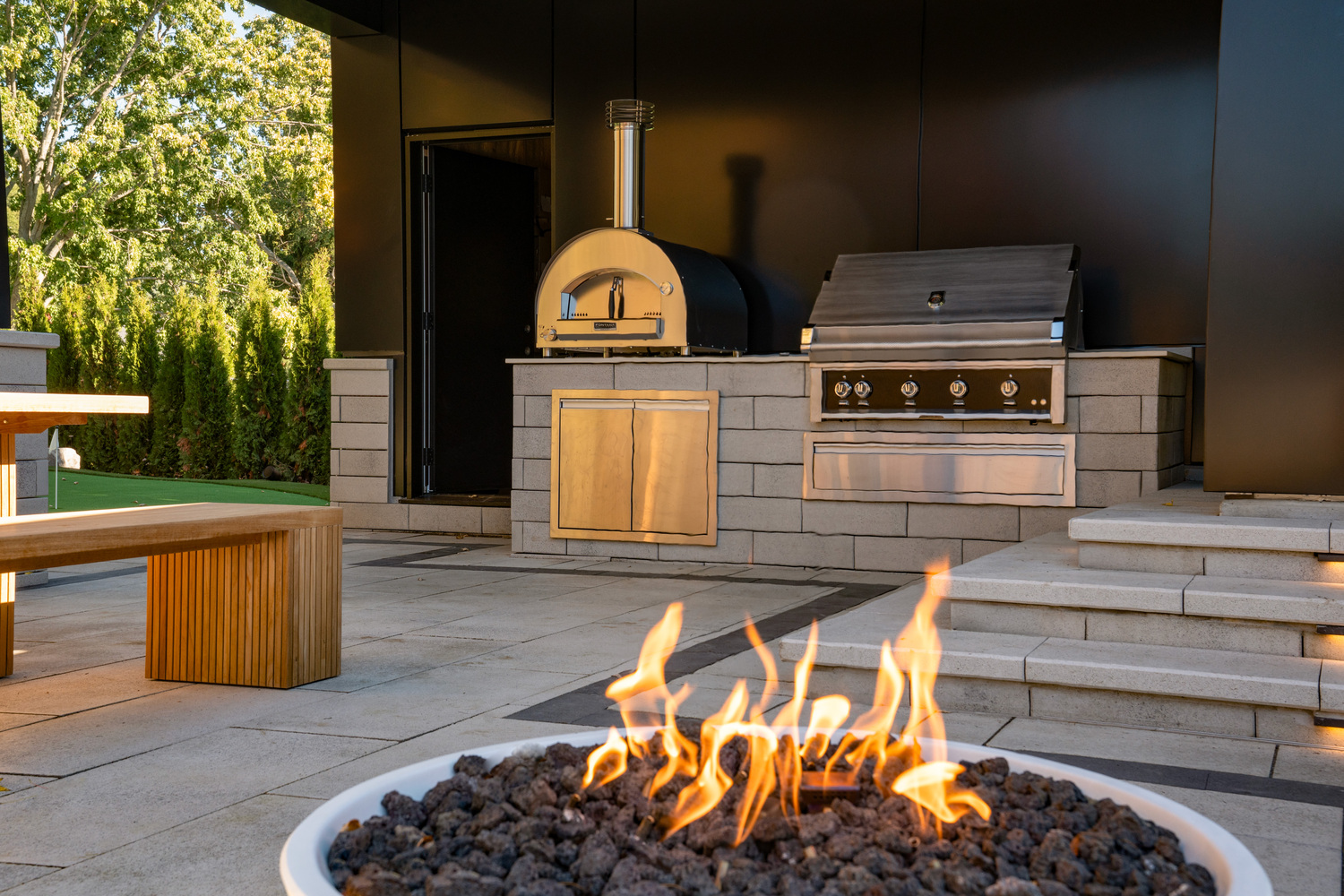
Gas-fired pizza ovens heat up quickly and avoid any question about burning solid fuel in the city. If you have your heart set on a wood-fired oven, check with Toronto Fire Services before you buy, since open-air burning is not allowed in Toronto and the rules for solid-fuel appliances are strict.
Fireplace or Fire Table?
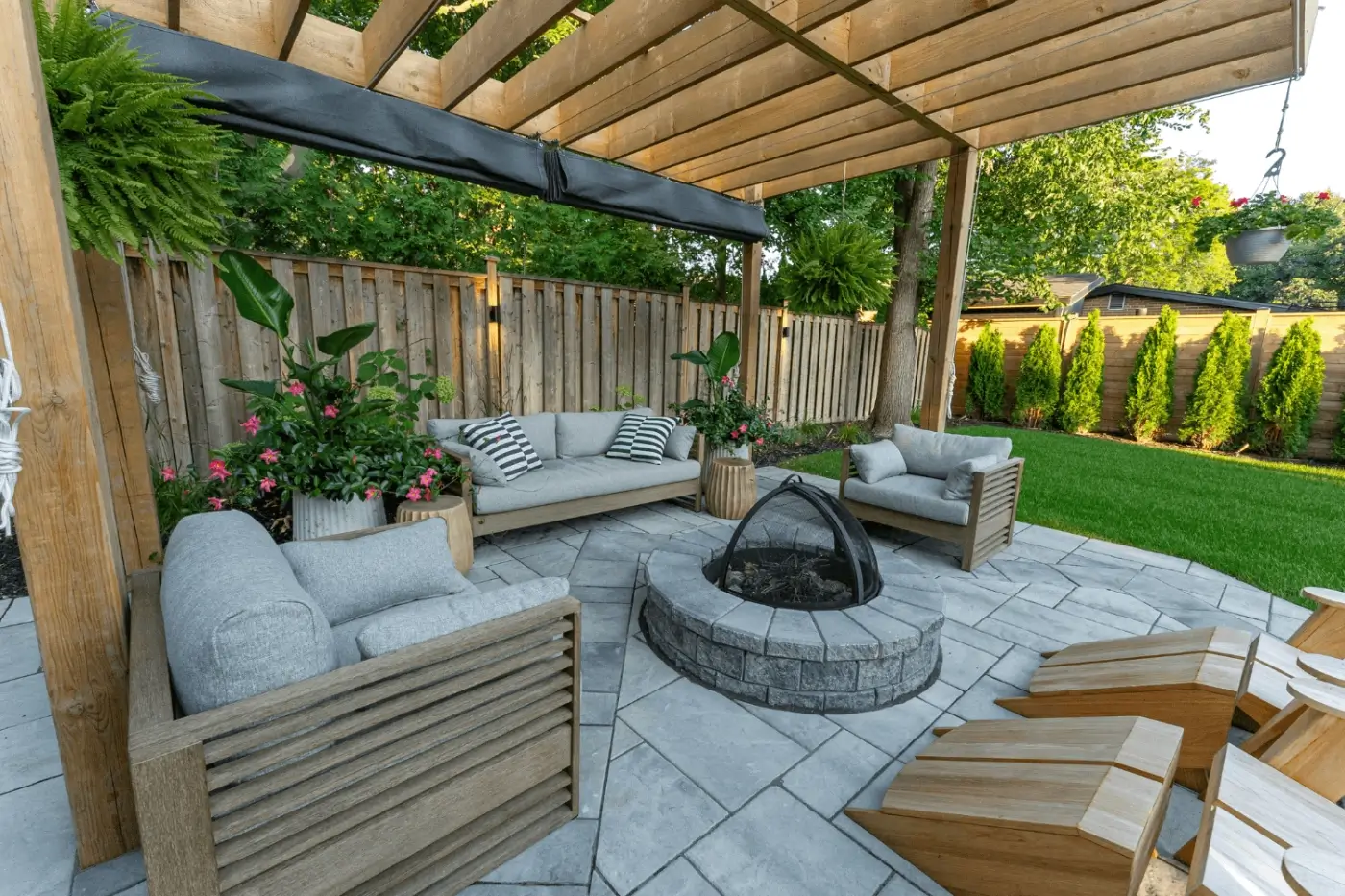
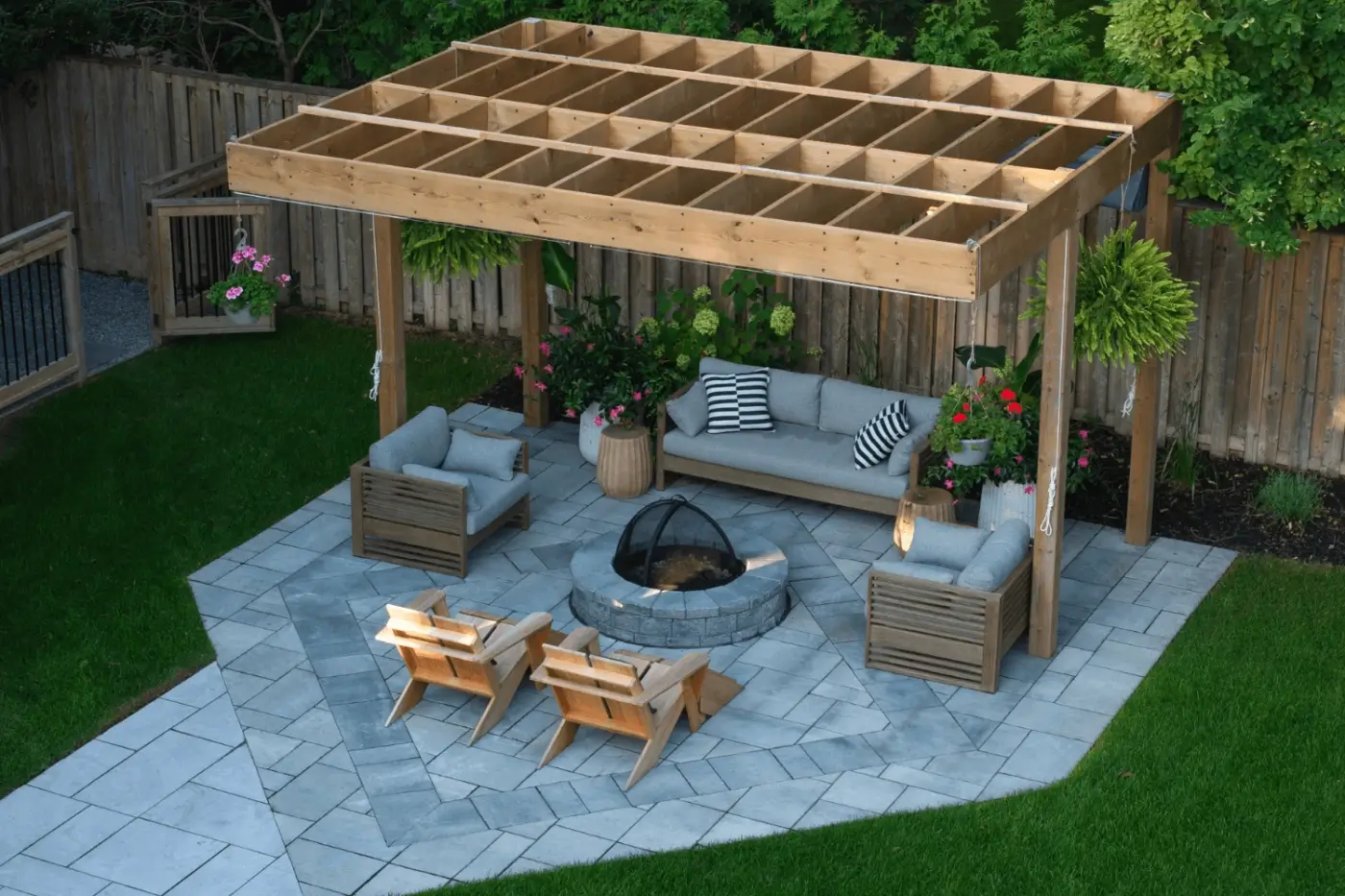
A built-in gas fireplace gives a strong focal point, blocks wind and can anchor a covered lounge. A fire table is lower, costs less and lets people gather all the way around it. Both run on natural gas or propane, and both need a clear space from overhangs and furniture.
Is an Outdoor Kitchen Worth It?
If you grill more than once a week in summer and host several times a season, a custom outdoor kitchen usually pays for itself in how much the yard gets used. If you grill a few times a year, a good freestanding grill on a well-designed patio may be the better spend.








 Price My Outdoor Kitchen


 View Our Projects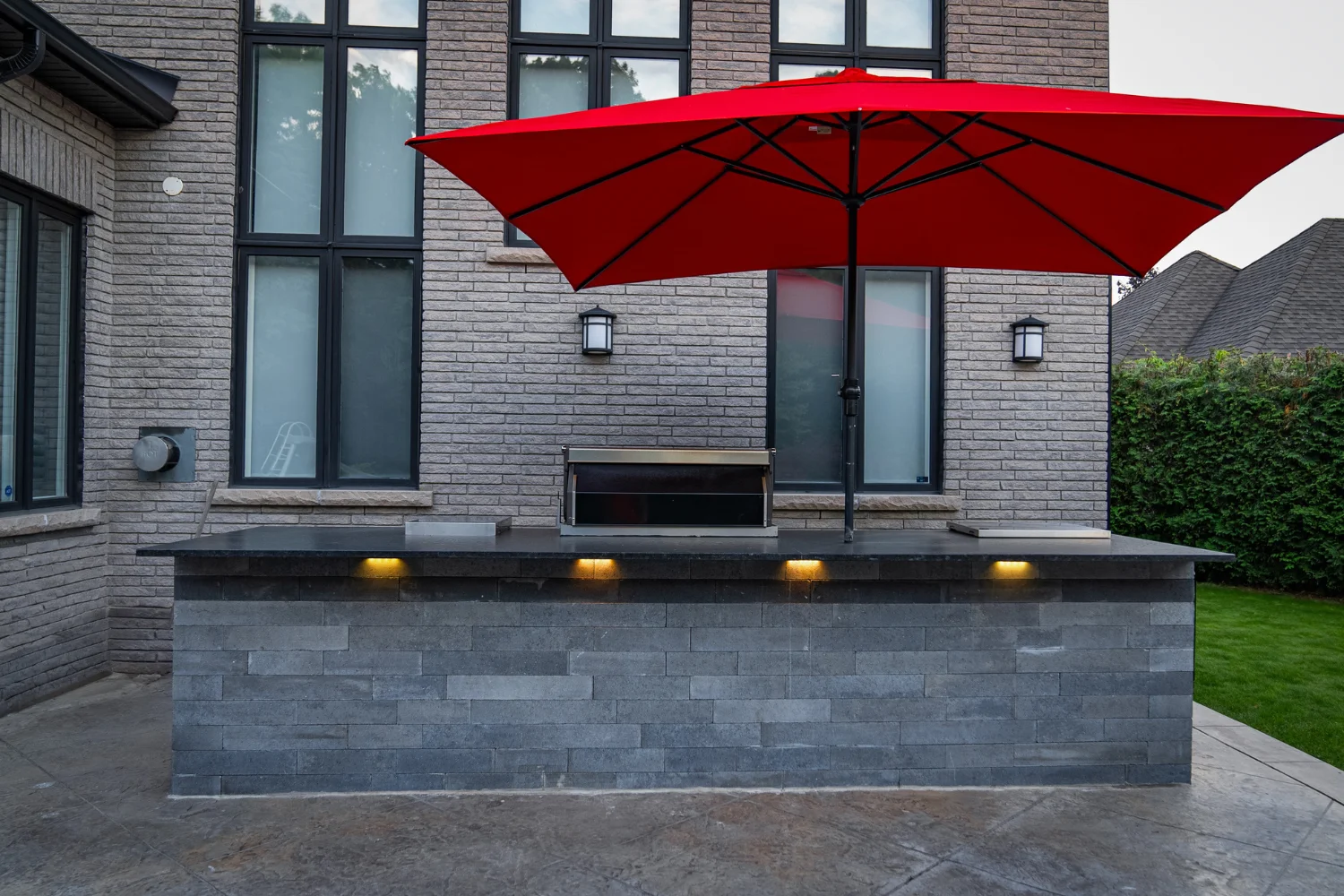


 (647) 937-1023